

For all Mikel Arteta’s positivity in post-match interviews and press conferences, his actions towards the end of Arsenal’s 1-1 Champions League draw with Borussia Dortmund did the real talking.
As his players spurned chance after chance, the Arsenal manager could be seen racing across his technical area in disbelief. Those initial, instinctive reactions were quickly followed by more encouraging gestures, but the 44-year-old was well within his rights to feel exasperated at his side’s profligacy in front of goal.
This was the second game in succession that Arsenal failed to build on a 1-0 lead, also drawing against Newcastle United in the Premier League at the weekend. Arteta made clear his frustrations about not going two or three goals up that evening, and while the tone of Arsenal’s draw with the Bundesliga leaders was different, failing to capitalise from positions of strength is a slight cause for concern.
Arsenal created four big chances against both Newcastle and Dortmund. They had 14 shots at St James’ Park and 30 at the Emirates Stadium, but too often they lacked the final piece of the jigsaw to edge closer to killing the game. They were fortunate that results elsewhere meant their lead atop the Premier League table extended to six points despite dropping two, but in the Champions League they are now fifth and could drop out of the top eight at the end of this matchweek depending on results.
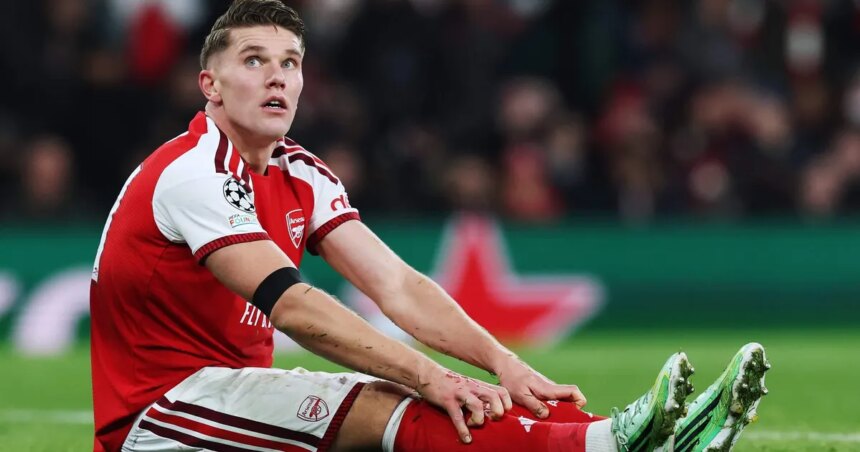
Viktor Gyokeres’ spectacular opener from outside the box was Arsenal’s only moment of clarity in the final third against Dortmund. He had the shot in his mind as soon as Noni Madueke stroked the ball into his path, which is what caught out Gregor Kobel in the Dortmund goal. After that, efforts from Gyokeres, Madueke, Declan Rice and Christos Tzolis were either taken at the wrong times or by the wrong player.
“There is an element of luck because how some of the shots haven’t gone in I don’t know,” Arteta said in his post-match press conference. “Last year, we hit somebody and it’d be an own goal. (It can be) quality, sometimes rushing or having a bit more composure to read the next pass a bit better. The execution can be better, but everything in between that was really good.
“I think it was a brilliant performance. The way we played, bearing in mind the opposition, is something to be very pleased with. It was unbelievable that sometimes the ball didn’t end up in the back of the net.”
What will convince Arteta of the ‘brilliance’ of the performance against Dortmund is the number of chances his side created. Their 30 shots translated to an expected goals (xG) tally of 2.34 and came in various ways.
Gyokeres’ goal was one of five outside the box in all competitions this season, with Brighton & Hove Albion the only Premier League side with more. He skied a better chance at the end of the first half, which came from good pressing by Madueke, while slick interplay between the Swede and Martin Odegaard set Rice free for another breakaway chance before the break (in which he should have passed to an open Madueke).
Dortmund had chances to draw level in the first half and were unlucky when Maximilian Beier did not connect with a low cross early in the second. His eventual equaliser did not come as a surprise.

Mikel Arteta watched his side let a winning position slip against Borussia Dortmund (Richard Pelham/Getty Images)
That chain of events was not identical to how Arsenal gave belief to Newcastle, but spoke to something Arteta had warned against earlier in the season.
Arsenal’s 2-0 win over Everton in October was one of their best performances of the campaign, even if that scoreline could have also been bigger. It came off the back of tight league wins against Nottingham Forest (1-0) and Leeds United (2-1), which prompted Arteta to say: “Today, I thought if they (Everton) stay in the result or score first and it drags into 60-70 minutes, we have a problem.”
Arsenal have won more games by a one-goal margin than any team in Europe’s top five leagues since the start of last season (21). That deserves credit, as Arsenal are capable of grinding out narrow victories, but games being allowed to drift is a point of contention. Arteta specifically spoke about giving Newcastle belief at the weekend, and that comes from sloppiness entering play in all areas of the pitch when a one-goal lead appears to be a strong enough buffer.
The difference between this issue now compared to last season is that Arsenal are creating chances.
Their matches were becoming narrower as winter hit last year, and tension came from a lack of fluidity in their play. The football on display now is much more free-flowing and entertaining, but missing that luck Arteta spoke of is putting them in similar situations towards the end of matches.
Gyokeres should have buried his late header to restore Arsenal’s lead, but he has been more “connected” in his overall play, to use one of Arteta’s words. Madueke also continued his strong form, acting as a driving force into the Dortmund box deep into added time despite not adding to his earlier assist.
Rather than looking devoid of ideas, it seems Arsenal need a better rub of the green to truly turn the screw when ahead.
“Obviously the feeling is that we should reward ourselves much more when you create that amount of chances and three-vs-two or two-vs-one situations when the ball doesn’t land to the right person,” Arteta said.
“We need to insist (keeping pushing) because the team has shown today the right direction.”