



New Jersey Governor Mikie Sherrill has mounted a strident defense of expensive train tickets to World Cup games at MetLife Stadium, insisting that competition organizers FIFA ought to step up and share the financial burden on U.S. host cities.
“I won’t stick N.J. commuters with that tab for years to come, that’s not fair,” Gov. Sherrill said in an early-evening post. “FIFA should pay for the rides, but if they don’t, I’m not going to let N.J. commuters be taken for one.”
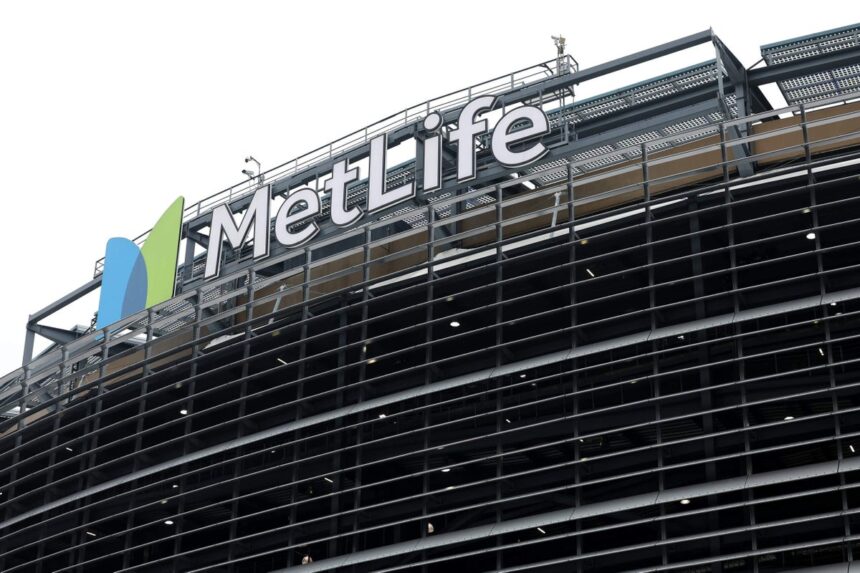
New Jersey is the host state for the FIFA World Cup final this summer, with MetLife Stadium hosting eight games across the competition.
Sherrill’s comments came a day after The Athletic reported New Jersey’s transportation provider, NJ Transit, is planning to charge more than $100 for a round-trip rail ticket from New York’s Pennsylvania Station to MetLife Stadium for World Cup games.
According to people familiar with the plans, who asked to remain anonymous in order to protect relationships, a ticket purchased via NJ Transit during the World Cup this summer is currently modeled for more than a seven-fold increase from its usual price of $12.90.
While NJ Transit ordinarily offers reduced fares for seniors, children and disabled passengers, the World Cup pricing will be a blanket fare for all categories. A final decision on the price is expected to be made in the next few days.
The potential fare surge was greeted with a significant backlash after The Athletic reported the scale of the price increase under consideration. Massachusetts MBTA’s decision to raise its pricing for travel from Boston to Foxboro’s Gillette Stadium to $80 for World Cup games, up from $20 for travel to an NFL game, sparked similar anger. It was also confirmed that Boston’s alternative bus service to the stadium would cost $95 per seat.
On social media on Tuesday, the planned NJ Transit pricing drew stinging criticism from New York politicians. New York Gov. Kathy Hochul wrote on X: “The World Cup should be as affordable and accessible as possible. Charging over $100 for a short train ride sounds awfully high to me.”
On Wednesday, Sherrill, whose office has been involved in discussions with NJ Transit and the New York City/New Jersey host committee over transportation plans for the World Cup, fired back at critics of the pricing and pinned blame on FIFA.
In a social media post, she explained that her administration inherited a hosting agreement with FIFA in which FIFA does not provide any dollars to assist with transportation costs for the World Cup. She then confirmed prior reporting by The Athletic, saying that the cost of providing special event services during the tournament will come in at a startling $48 million for NJ Transit.
Hemos heredado un acuerdo en el que la FIFA no aporta ni un solo dólar para el transporte del mundial.⁰⁰Y mientras NJ Transit se queda con una factura de 48 millones de dólares para transportar de manera segura a 40,000 fanáticos desde el estadio hacia donde vayan, la FIFA esta… pic.twitter.com/e5JvlkRGhp
— Governor Mikie Sherrill (@GovSherrillNJ) April 15, 2026
Sherrill cited FIFA’s own numbers against the organization, saying that FIFA is forecasting $11 billion in revenue during the tournament while tickets are going for up to $10,000 to watch the World Cup final at MetLife Stadium. She then laid out that she is faced with a choice: either to transfer the cost to New Jersey taxpayers and commuters, or to soccer fans during the tournament. She then challenged FIFA to step up and cover the costs.
In her post, Sherrill did not deny the plan to set ticket prices above $100, nor has the host committee or NJ Transit, which has merely said its pricing plan is yet to be finalized. Sources at NJ Transit told The Athletic that FIFA’s security requirements demand the highest-level security perimeter of any events hosted in New Jersey.
During the 2022 men’s World Cup in Qatar, official ticket-holders received free access to Doha’s metro system throughout the tournament. Similarly, at the 2024 European Championship in Germany, match ticket holders also had access to free public transport on game day in host cities.
The U.S. was never likely to follow the lead on this, with cities and states seeking to recoup huge investments in the World Cup via the promised economic impact of the tournament, while the Qatar central government poured vast sums into the competition as part of a broad state-building project.
Yet the scale of the price surges will stun many locals and visitors. For local organizers and legislators, the decisions on World Cup pricing have not been straightforward nor consistent, often varying widely depending on location and local budgets.
On Wednesday, Kansas City rolled out a much gentler pricing plan, with the host committee offering complementary bus services for visitors to travel downtown from the airport during the World Cup. Matchday round-trip buses to the stadium will be available for $15, and drivers will collect and drop off fans from four different locations.
Philadelphia, meanwhile, also announced on Wednesday that its SEPTA subway service will remain priced at $2.90 for fans to get to World Cup matches at Lincoln Financial Field.
Under FIFA’s original hosting agreements with U.S. cities, world soccer’s governing body banks the income from tickets, broadcasts, concessions, sponsorships and official parking fees. FIFA president Gianni Infantino has said his organization will earn around $11 billion in revenue from the World Cup in North America, while its budget is around $3.5 billion.
Cities carry the cost burden for “safety, security and protection,” plus stadium adjustments — which have cost many cities huge sums of money — as well as public transportation expenses.
In return, FIFA and the cities have often touted the World Cup’s huge economic impact, with Infantino citing a report that claimed the U.S. economy would gain $30 billion by hosting the tournament. Several city executives have cast doubt on those figures, with some agencies now seeking to claw back revenue where they can.
Sherrill entered office earlier this year and has taken a significantly different approach to the World Cup than her predecessor, Gov. Phil Murphy. As part of a blitz of policy changes, she also made a decision to pull an official FIFA Fan Fest at Liberty State Park, instead diverting a lesser amount of money to smaller watch parties and street fairs.
Sen. Chuck Schumer (D-N.Y.), the Senate minority leader, also accused FIFA of a “shakedown” of U.S. host cities in a statement released Tuesday afternoon.
“FIFA is set to reap nearly $11 billion from this summer’s World Cup, yet New York area commuters and residents are being handed the bill,” said Schumer.
“NJ Transit may be forced to charge fans an eye-popping $100-plus for a train ride that normally costs $13, because FIFA’s hosting agreement dumps added transportation and security costs onto states and cities while FIFA keeps the revenue from tickets, broadcasting, and concessions.
“That is not a partnership, that is a shakedown because World Cup tickets already cost fans a fortune. I am calling on FIFA to step up and cover transportation costs for host cities and states,” Schumer said.