

Editor’s note: This story is part of The Athletic’s coverage of SailGP, an international sailing competition that has been likened to Formula 1 on water. Follow SailGP here.
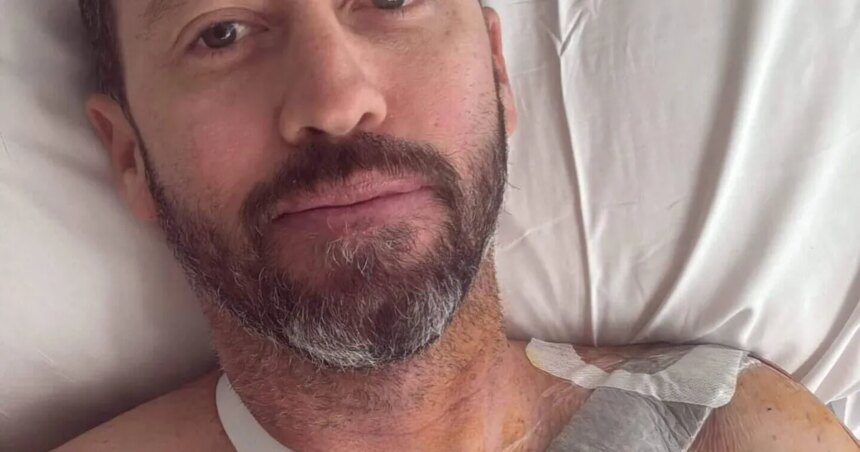
This weekend in Dubai, Taylor Canfield will be reminding himself that the last time he raced, he won. That was when the American drove the U.S. SailGP Team to victory in a light-wind final in Valencia, Spain, in September. Less than a week later, he broke his collarbone after being thrown from his bike in a collision with a car while cycling in Newport, Rhode Island.
The injuries could have been so much worse. Nevertheless, it has been a race for Canfield to get back to fitness in time for the final two events of the season: in Dubai this weekend and the season-ending grand prix in Abu Dhabi next week.
It has been a life-changing couple of months for the 37-year-old. Canfield has been on a tough rehab program and got married in early October to his now-wife Courtney.
Canfield’s accident temporarily upended a carefully managed campaign for the U.S. team, one of the revelations of this season. After a terrible 2025 that involved self-inflicted capsizes and collisions, the Americans hit the reset button in Abu Dhabi a year ago. They have been operating on a higher plane ever since, winning events in Sydney and Valencia this year.
The accident also set off a chain of events nobody on the team had planned for: emergency surgery for their leader, a second injured driver a week later and an Olympic champion borrowed at short notice to drive the boat in Switzerland in September.
The team that had spent a year learning to stay upright suddenly had to keep its balance without its helmsman.
It began on a quiet road by the beach.
At 7:45 a.m on a bright Saturday in September, Canfield set off to meet friends for a ride. He was on a road he had cycled more times than he could count, with no stop signs in his direction. A car came up a side road. Canfield saw it slow and assumed it would stop. Then it began to accelerate again. “I was hit by the front of her car,” he told The Athletic.
Canfield never lost consciousness. His shoulder felt rotated forward and badly out of place, and his first thought was that he had dislocated it. Adrenaline masked most of the pain.
“The first thing that popped into my head was, ‘Oh my God, this is going to be a nightmare, and a tough recovery,’” Canfield said.
He was more concerned about how much sailing he might miss. “It was definitely a moment of extreme frustration,” he said. “Not even toward the driver. Just toward where I was in that moment.”
Help came quickly. A man heading out for an early walk called 911 and helped Canfield off the road. Canfield never got his name. The driver of the car that struck him got out to check on him, and a nurse riding by on her bike stopped to assess him before the ambulance arrived.
Scans at Newport Hospital confirmed a broken collarbone, the first of Canfield’s career. He knew it could have been far worse. He also knew the calendar. No way would he be able to race on Lake Geneva a week later.
Mike Buckley, the team’s CEO, was walking into a diner in Manhattan’s SoHo with his young children when his phone rang. He and Canfield talk most mornings. This call was different.
“I could hear right away in his voice that it was not a normal call,” Buckley said.
Once it was clear Canfield was not in danger, Buckley switched his attention to solving the problem. Buckley had had surgery at the Hospital for Special Surgery (HSS) in New York, a renowned orthopedic hospital, and knew people on its executive team. That Saturday, he emailed its chief commercial officer asking for help. Within minutes, the right people were on the email thread and a surgeon had been recommended. By Monday morning, Canfield was in an operating room in New York, where Dr. Aleksey Dvorzhinskiy repaired the fracture.
“I can’t say I’ve ever experienced anything like it,” Canfield said. “Everything was planned out to the minute: who I was seeing, which specialist I was seeing next.”
There was even talk of buying an oxygen chamber for his home to speed up the recovery. The team looked into models priced from about $5,000 into the tens of thousands, then decided it wasn’t needed. The recovery would come down to natural healing and hard work.

Canfield has worked with two physical therapists to ready himself for this weekend’s Dubai SailGP. (U.S. SailGP Team)
The first five weeks were the hardest. Canfield’s arm was in a sling, his mobility was limited, and progress felt slow enough to make him nervous. Putting a shirt on was such an ordeal that for about three weeks he simply didn’t. Instead, he walked his dog, Dexter, through his new neighborhood bare-chested with his arm strapped up.
When his doctors cleared him for banded and isometric exercises, things moved fast. He has worked with two physical therapists, one focused on the soft tissue around the shoulder and collarbone, the other on strength. He now has close to full range of motion over his head, which he says he would not have believed possible two weeks earlier.
Alongside the rehab, Buckley said, Canfield has been studying film, reviewing past races in the Middle East and digging into the SailGP data cloud, but there has been no honeymoon; Courtney is coming to Dubai instead.
Canfield’s absence in Switzerland shouldn’t have been the major headache it became. Reserve driver Harry Melges was ready to take over the wheel, and Buckley spoke to him the same day Canfield was injured. The next day, Melges was injured himself, breaking his ankle when jumping into a motor boat. Two months on, Melges remains on the inactive list, still recovering from surgery.
They turned to Martine Grael. The two-time Olympic champion had recently been removed from driving duties for the Brazilian team and was invited to steer the American F50 catamaran in Geneva at a pivotal point in the season. She had had no training time with the crew. Perhaps not surprisingly, given the circumstances leading up to the weekend, the team finished last.
From the outside, Geneva looked like a setback. For the team, the target was different. Buckley said the goal was to leave Geneva within five points of a place in the season-ending grand final; the margin at which the team felt its fate was still in its own hands. It left three points short.
“We actually achieved the internal goal that we had,” Buckley said. It was also because their chief rivals for making the grand final in Abu Dhabi suffered poor weekends in Geneva.
Whether the U.S. reaches next week’s grand final — a winner-takes-all race for the championship between the top three teams in the overall standings — is up to the U.S. “That’s what any athlete could ever ask for, having it be in their control and not in another team’s control,” Buckley said. “That’s where we are, and I like our chances.”

Taylor Canfield (second left) celebrates with his team after winning in Sydney earlier this year. (Felix Diemer for SailGP)
A title victory after such a chaotic season would make a tidy story. Buckley rejected the idea that it would be a fairy tale, however.
The Americans finished third in Dubai two years ago, and Buckley believed his team had an edge on lighter-wind racecourses. He is quick to add that a lot has changed since then, for every team, with big technical developments in the boats, wings and foils.
The biggest question is the driver. “What’s the old saying? You’re only as good as your last race,” Buckley said of Canfield’s win in Valencia. “Hopefully, he’s still riding that high.”
Canfield’s preparation, though, has come in the gym and on the physical therapist’s table, not on the water. A slow start or a mistimed maneuver in a short fleet race this weekend can cost points that are hard to win back, and the Americans have little margin to spare, being three points adrift of Sweden in third with two events remaining.
Canfield insisted the shoulder will not be the problem. Light winds are expected for both events, but asked whether he could compete if the breeze came in strong, Canfield answered without hesitation.
“Yes,” he said. “There’s a little discomfort in certain motions, but when we’re in the moment, I don’t think I’m going to feel anything. The adrenaline will kick in. It’s going to be game time. Let’s go.”