

With all due respect to one of our most beloved national holidays, for the Los Angeles Angels and their long-suffering fans, it’s Independence Day.
Independence from owner Arte Moreno, who, in no particular order, wrecked the franchise in the following ways:
• Presiding over 11 straight losing seasons.
• Conceding Los Angeles to the Dodgers, transforming a club in one of the game’s largest markets into an industry punchline.
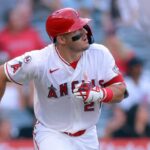
•Failing to win with Mike Trout and Shohei Ohtani, ultimately losing Ohtani in free agency and never even winning a postseason game with Trout.
Tuesday’s shocking announcement – Moreno’s sale of the club for a record $4 billion to Los Angeles Rams owner Stan Kroenke, pending Major League Baseball approval – was a watershed moment not only for the Angels and their fans, but also the entire sport.
Kroenke, 79, is considered in the upper echelon of NFL owners, spending the necessary money, hiring top executives and coaches, granting them autonomy. But really, almost any billionaire would have been an upgrade.
Why Angels fans should be rejoicing after the team is sold
Andy McCullough
Moreno, 80, bought the Angels in 2003, the year after the team won their only World Series title. The Angels reached the postseason in five of his first six full seasons, but since 2010 have made only one playoff appearance – in Trout’s third year, 2014.
When Moreno spent big (Josh Hamilton, Anthony Rendon, Albert Pujols for the second half of his career), it often went badly. He ran through six heads of baseball operations, almost all of whom functioned largely at his whim. The team also is on its fifth manager since Mike Scioscia’s retirement after the 2018 season.
The Angels continually failed to face the reality of their place in the baseball universe under Moreno, both declining to rebuild and declining to take the necessary steps to win. Under Kroenke, they presumably will operate more coherently. How could they not?
Here’s a quick look at what the sale figures to mean, for interim general manager John Mozeliak, free agency and Trout, for the upcoming labor battle, franchise values and Angels fans.
Mozeliak
Kroenke will have the right to hire his own man, but Mozeliak looms as an obvious choice to remain in his present role, if not an expanded one as president of baseball operations.
Moreno hired Mozeliak only last June, and for only six months. The difference with Mozeliak was that, unlike his four predecessors, he was not a first-timer in the job. He previously ran the St. Louis Cardinals for 19 years, and Moreno allowed him to operate with more latitude than his previous top baseball execs.
Mozeliak made six trades before the deadline, most notably parting with right-hander José Soriano to land a top shortstop prospect from the Toronto Blue Jays. It was the closest the Angels came under Moreno to rebuilding, but Mozeliak has said he does not believe a teardown is necessary, considering the resources available in the Angels’ market.
Kroenke, it would seem, would be wise to follow such a blueprint. Mozeliak’s final years in St. Louis were disappointing, but he seems rejuvenated in Anaheim and certainly is capable of handling the job.
The Angels could do a lot worse.
Free agency
The Angels ran top-10 Opening Day payrolls the first 20 years of Moreno’s ownership. But in the past three seasons, they ranked 13th, 10th and 15th.
Kroenke should be motivated to change all that, bringing the Angels back to the forefront of free agency, whatever that might look like under the next collective bargaining agreement.
One former major leaguer, granted anonymity for his candor, said upon learning of the sale that Angel Stadium needs “serious upgrades,” but added, “other than the (California state) taxes, it’s the perfect baseball spot.”
For too long, Moreno wasted his market’s immense appeal. Players want to live in Southern California. The Angels do not attract nearly as much media attention as the Dodgers. The place is about as comfortable as there is in the league.
Trout
The future Hall of Famer now stands a better chance of finding fulfillment with the franchise he has been so reluctant to leave.
Trout, 35, frequently has drawn criticism for his unwillingness to push for a trade to a contender. He repeatedly has said he wants to win with the Angels, in part out of his loyalty to Moreno, who signed him to two massive contracts.
Four years remain on Trout’s deal after this one, at $35.45 million annually. He is enjoying something of a renaissance this season, hitting 20 home runs with an .807 OPS, playing in his first All-Star Game since 2019. If the Angels get their act together under Kroenke, the chances of Trout returning to the October stage no longer will be minimal.
Labor
The timing of the Angels’ sale is surprising in part because Moreno is one of the biggest labor hawks among owners. He took the team off the market in 2023, and presumably wanted to wait and push for a salary cap that would create cost certainty and enhance the value of his franchise.|
Instead, Moreno jumped.
Kroenke, whose affiliated entities already own teams in salary-cap leagues, including the Rams, the NBA’s Denver Nuggets and NHL’s Colorado Avalanche, figures to take much the same position as Moreno. He knows the major-league owners are not going to approve some dissident. And he surely will endorse any effort to neutralize the Dodgers, his competition in the Los Angeles market.
Franchise values
League officials earlier this year were quick to downplay the San Diego Padres’ then-record $3.9 billion sale price, calling it an outlier. For many of the same reasons, they likely will view the Angels’ record price the same way.
Teams in California are an exception because they rarely become available, the league officials said. Because the state is home to a number of wealthy potential buyers. Because the Orange County is highly attractive, just as San Diego was after the late Padres’ owner, Peter Seidler, revitalized the franchise.
The league likely will point out that the record franchise values are still far below those in cap leagues, citing the recent sale of the Los Angeles Lakers for $12.5 billion as one example. It also will point out that the prices for the Angels and Padres might have little effect on teams in markets that generate lower revenues. The Minnesota Twins could be one, the Washington Nationals another.
In other words, nothing figures to change in the owners’ pursuit of a cap. They say they want it to enhance competitive balance. But what they really want is for more teams to sell for higher prices, following the lead of the Padres and Angels.
Angels fans
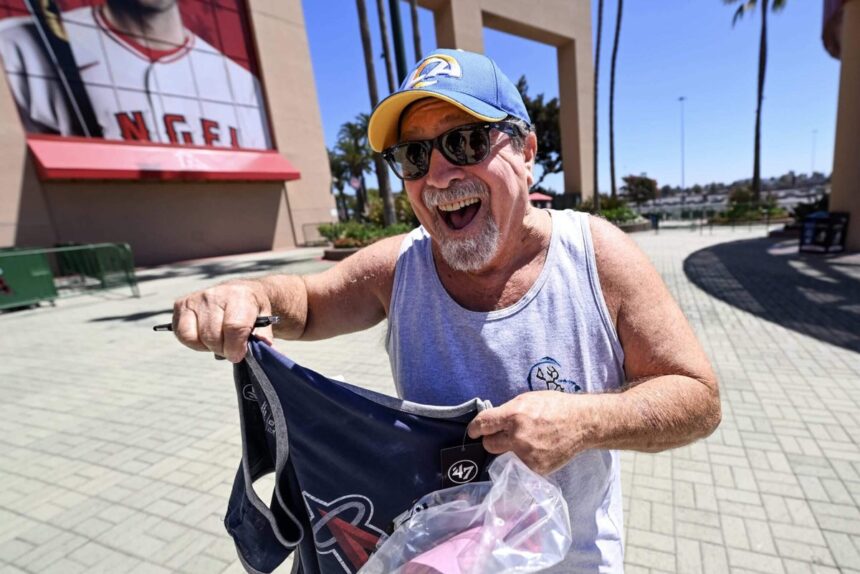
Meet the new boss, can’t be as bad as the old boss.
Go celebrate Independence Day.