

In the wake of a Louisiana court order that granted eligibility to several football players who’d already gone through NFL training camps — and with at least one SEC school, LSU, actively pursuing them — the SEC issued a sternly worded statement Monday night expressing its disapproval.
“Individuals who choose to leave college athletics, sign professional playing contracts, and compete professionally should not then be permitted to return to college competition.” Which begged the question: Can’t you guys not permit them yourselves?
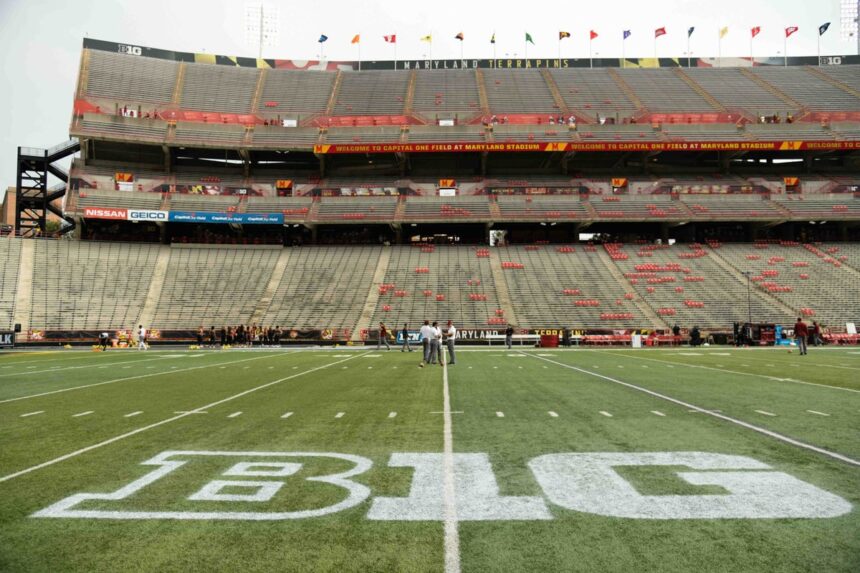
As it turns out, the SEC’s foils in Chicago were already working to do just that. Tuesday, Big Ten ADs approved an impromptu rule banning any athlete who has signed an NFL contract from playing for a Big Ten school.
A statement from the Big Ten on student-athlete eligibility. pic.twitter.com/Hote5wYsMU
— Big Ten Conference (@bigten) August 25, 2026
In taking such decisive action, Tony Petitti’s league didn’t just address an urgent issue in real time. It offered a potential peek into a new era where conferences step in for the legally neutered NCAA and take rules enforcement into their own hands.
Note: The SEC, not the Big Ten, is the league that’s been threatening to start governing itself, but, as of Tuesday afternoon, had not taken similar action.
Over the last two years, pretty much every longstanding NCAA eligibility rule has been struck down by a state or federal judge. Junior college years count toward your NCAA eligibility? Not so, said the Diego Pavia judge. A G League player can’t come back to college three years after turning pro? Sure he can, if Alabama needs a big man (Charles Bediako, who played five games before a different judge reversed that one). Heck, not even betting on your own team is a disqualifier anymore, said the Brendan Sorsby judge in Texas.
In that instance, though, the Big 12 took matters into its own hands, suing Texas Tech after Attorney General Ken Paxton threatened to sue them if it punished Sorsby. The gambit worked, as Tech and Sorsby backed down amidst intense national backlash.
Perhaps that move by Big 12 commissioner Brett Yormark emboldened Petitti and his presidents and ADs to take on the NFL-back-to-college issue themselves.
The NCAA’s new five-year eligibility policy has elicited a cascade of lawsuits from the class of athletes who left school in the spring after completing their fourth season. While it is impossible to keep track of them all, one judge’s ruling in Louisiana last week caught everyone’s attention. Among the 33 plaintiffs to whom he granted a fifth year were several football players — including former Ole Miss starters Dae’Quan Wright, Zxavian Harris and Wydett Williams and former LSU player Jack Pyburn — who were on active NFL rosters at the time.
A hard firewall has long prohibited any player who’s even declared for the NFL Draft, much less gone through preseason, from returning to school. In granting these players a fifth season of eligibility, the judge unilaterally declared last Thursday that they could return to college and enter the transfer portal so long as they were released by their NFL teams and paid back any money they’d received.
Wright, for one, had not even been officially cut before he entered the portal and committed to … who else … his former Ole Miss coach, LSU’s Lane Kiffin. Harris is reportedly headed there, too. Folks across college football were peeved.
“You’re a professional now, once you declare for the draft,” Oregon coach Dan Lanning said. “So to let any of those players come back, fair or unfair to them, it’s unfair to the sport, and I think it’s unfair to the players that are on current teams for those guys to be coming back.”
“College football has officially plunged into the abyss,” ESPN provocateur Paul Finebaum said. “… There have been far more serious scandals, but this is a new low in terms of the machinations of the legal system, the NCAA and all these things.”
Big Ten coaches and administrators took notice. A conference official told The Athletic that informal calls over the weekend led to a discussion about the issue Monday during a previously scheduled meeting of some university presidents, leading to an impromptu ADs meeting later the same day. The conference then worked with its legal and compliance teams to draft a rule that the ADs approved by midday Tuesday.
They moved with urgency because by Sunday, NFL teams will be forced to make more cuts to get down to 53 players.
The policy conveniently doesn’t cover one potential Big Ten roster add. Former James Madison linebacker Trent Hendrick, who was also part of the Louisiana lawsuit, has already reunited with his former coach, UCLA’s Bob Chesney. One key distinction with Hendrick: While he participated in a minicamp tryout with the Browns in May, he never signed a contract or joined a roster.
All of this, of course, begs an obvious question: Won’t the banished athletes turn around and sue the Big Ten, too? They certainly could, but it’s long been theorized that conferences’ restrictions are easier to defend legally. Unlike the NCAA, they’re not joining forces with all of the other Division I conferences to ban someone from playing college football. If the SEC made a similar rule preventing Wright from suiting up for one of its 16 schools, it could rightfully argue that he still has plenty of other places to play college football and make NIL money.
As sports legal expert Michael McCann wrote in a Sportico article, the Supreme Court in its landmark Alston v. NCAA ruling five years ago distinguished between “multiconference agreements” and individual conferences’ rules.
The Big Ten also has one significant advantage in enforcing this rule: time. College teams have to lock in their 105-man rosters by the day before their first game, which for USC is this Friday and for the other 17 schools, the following week. Courts don’t generally operate that quickly.
Nothing suggests the Big Ten or any other conference is rushing to take control of the entire NCAA rulebook anytime soon. If anything, they’re still hoping Congress will do it for them.
Still, some issues, like this one, aren’t very complicated. The Big Ten gets to take a victory lap because of it.