



The Athletic has live coverage of the latest 2026 World Cup news.
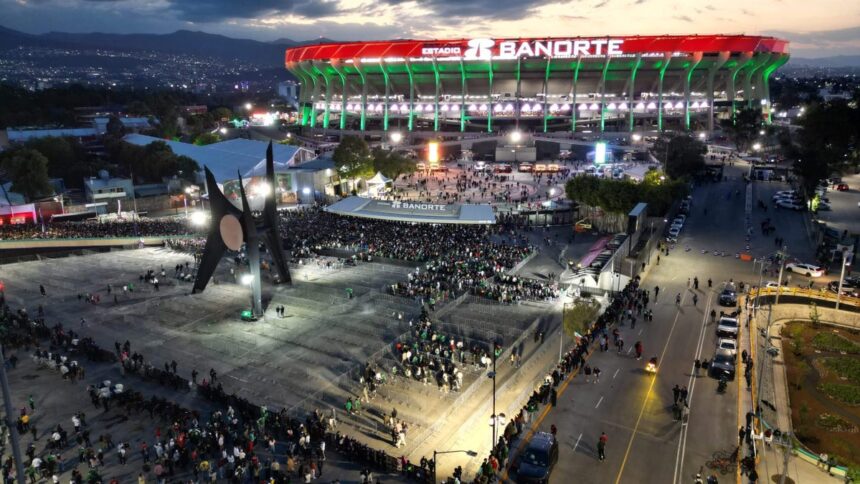
The looks on the faces of the Mexico fans as they came through the turnstiles on the east side of the stadium told their own story.
This was not just excitement. It was reverence, maybe even something like awe. There it was, rising up above them, the concrete colossus, home to a million memories and a million more hopes and dreams.
It looked a little different: big sponsor logos at the top, a few bells and whistles. Mainly, though, it looked the same. The Estadio Azteca, a few weeks out from its 60th birthday, as imposing and beautiful as it ever was.
They had waited nearly two years for this moment. The stadium had been closed since May 2024 for the fourth major refurbishment of its history. Mexico’s friendly against Portugal was billed as both a soft relaunch — a de facto test run, 75 days before the Azteca plays host to the opening game of the World Cup — and a national celebration.
What it turned into was a night of conflicting emotions on all counts.

Mexico fans arriving at the Azteca for the friendly with Portugal (Yuri Cortez / AFP via Getty Images)
There was a buzzy, big-ticket feel to the thing for much of the evening. Manuel Negrete, the scorer of one of the great goals here for Mexico at the 1986 World Cup, drew huge applause before kick-off. The half-time light show, soundtracked by Cielito Lindo, the county’s unofficial anthem, was genuinely stirring.
As a standalone event, though, it will be remembered primarily for the tragic death of a fan shortly before kick-off. That it did not undercut the festivities in the moment seemed to owe more to the news taking time to filter through to those present. It was not announced in the stadium; the fans The Athletic spoke to after the final whistle were not yet aware of what had happened.
While local authorities investigate the circumstances of the death, it would be wrong to draw any firm conclusions from the incident.
The evening did allow a limited assessment of the Azteca’s readiness for the World Cup, however.
First, the good. The interior of the stadium, with its new seats, new pyrotechnics and deafening new sound system, felt modern and vibrant. And while big refits can dull the charms of historic stadiums — the Maracana in Rio de Janeiro is the prime example here — the consensus view among reporters The Athletic spoke to was that the changes had been relatively light-touch.

New pyrotechnics were on display at the Azteca (Alfredo Estraella / AFP via Getty Images)
A new transit protocol, with closed streets and a park-and-ride system, got mixed reviews in some quarters but seemed to function broadly as anticipated. Those leaving the stadium by taxi or ride-share had to reach the perimeter on foot but the areas around the stadium were well lit and calm, even approaching midnight.
That was partly down to a heavy — and very visible — police presence. Around 10,000 security officials were on duty, according to reports in the Mexican press, implementing what local authorities were calling “Operation Last Mile”. There were multiple arrests for ticket touting. The mood was serious but not tense.

There was a prominent security presence at the game (Carl de Souza / AFP via Getty Images)
Elsewhere, there were minor alarm bells. Some of the surfaces on the concourse on the stadium were uneven, rough and rubbly. Building materials were stacked by walls. There have been multiple delays to the renovation since it began; clearly, a significant amount of work remains to be done.
The rough-and-ready press area, relocated to an upper corner of the stadium, drew raised eyebrows from some. There was no water for those working and widespread confusion about where post-match media duties were due to take place. Stadium staff, while plentiful and friendly to a person, were unable to provide relevant guidance. “It’s chaos,” remarked one Mexican reporter during a particularly fraught moment.
Yes, I know: ‘Won’t someone think of the poor journalists!’ But fans encountered similar issues. Hundreds were still queuing outside the west entrance as kick-off approached, their stress amplified by confusion over the cause of delays and poor signage inside the main gates.
Jaime Diaz was one of those caught out. He joined the queue at 5pm and only just made it to his seat before the match began.
“They said to arrive early but we thought two hours was enough,” Diaz, 30, tells The Athletic. “It was just a mess. They would stop the queue from going forward, randomly. It was frustrating. There wasn’t signage saying where to go for each entrance.
“The most concerning part was at the metal detector. People were flying through. The detector was going off but security did not really bother to check. There was no second inspection.”
These all seem like resolvable issues, but time is short. Mexico only have one more game here before the World Cup begins. When it does, any point of friction will be magnified to a huge degree.
As for Diaz, he says he enjoyed his evening despite the pre-match stress. But he has already altered his plan for the South Africa game on 11 June, which begins at 3pm, local time. “It was one of the most beautiful views I’ve ever had in a stadium,” he says. “But after experiencing this, I’ll be getting to the general vicinity of the stadium at 9am for the opening World Cup game. I won’t be taking any chances.”