

‘That’s Entertainment’ blared out over the public address system pre-match at Craven Cottage; The Jam’s 1980 hit was a premonition of what was to come.
There was a certain irony, amid the madness of a thrilling five-goal game, that Crystal Palace’s goals all came from left wing-backs. Firstly, Tyrick Mitchell’s unlikely brace, then his replacement Ben Chilwell’s slightly scuffed shot to win it. It was that pair who brought the fun, but Palace’s defending left plenty to be desired.
Chaos has been a feature at Palace in recent weeks. Their busy transfer deadline day had followed two defeats in which they conceded six times, often being picked off in transition. When two more goals were conceded against Fulham, albeit answered both times with Palace equalisers, it felt like that theme would continue.
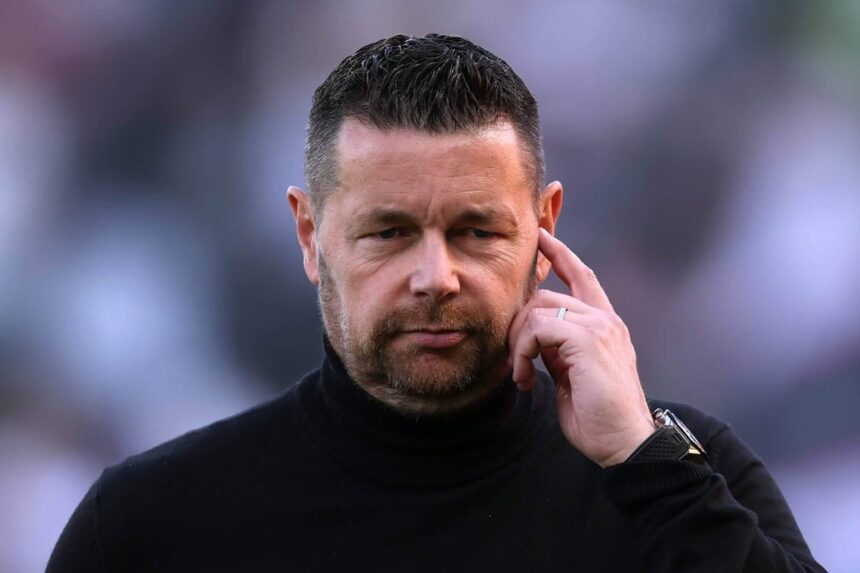
Pierre Sage has his first points as manager, and his preferred style of play has already become clear. What happens in the weeks to come may tip the scales in his favour as it did in bizarre circumstances here, but he will have to find a happy medium on that risk-reward scale given he appears to want to play a style that has a strong attacking instinct.
Palace will, and already have, come up against teams who will punish them for slack defending. That is the area most in need of remedial work so far, and may see them heavily defeated at times this season. But they probe forwards with speed and purpose and have the players to create chances.

Tyrick Mitchell scored an unlikely brace for Palace (James Fearn/Getty Images)
Wasting those opportunities was their failing against both Everton and Manchester City, but it was rectified against Fulham, only for the defensive problems to be starker than before. Sage had said in his pre-Fulham press conference that his team played the way he wanted for longer against City, and this style of play will take time to embed, especially with 11 signings, of which four came on deadline day.
But with Anan Khalaili playing so high and struggling to return back to his position, Chris Richards stood no chance against Josh King one vs one when pulled into that right back role. Again, any quick wide player coming up against him in that type of situation is likely to have plenty of joy.
Time after time, Fulham played diagonal passes into the area, or deep beyond the Palace defence and either cut the ball back or worked space to shoot. Against Everton, Iliman N’Diaye’s cross for the second goal came after progressing towards the byline even if that time it was a set-piece in the build up.
Sage’s way of playing is not a radical departure from that of his predecessor Oliver Glasner, but it is notably different. His team plays a more aggressive, higher press. They have shown slicker, quicker, more efficient patterns of play in the attacking phase. Several times at Craven Cottage there were delightful swift moves forward with quick line-breaking passes which created openings, if not always actual opportunities on goal.
It is a tough balance to strike. All three of Palace’s centre-backs looked all over the place at times but they were not helped by the huge space between them and the midfield. Sage acknowledged post-match how his two No 6s, Quinten Timber and Adam Wharton, barely touched the ball in the first half and were bypassed too often.
Palace allowed 68 touches in their box, the highest since a 2-2 draw against Manchester City in January 2020 and well above last season’s Premier League average of 25.4. Fulham totalled 25 shots to Palace’s 10.

Ben Chilwell celebrates scoring the winner at Craven Cottage (James Fearn/Getty Images)
“I have to accept the story of today,” Sage said in his press conference. “But you can change things to improve the defending because we are too open and not coordinated. This lesson is free because we won but we (were) aware (of this problem) before.
“It’s not only about balance but about efficiency. Our two No 6s didn’t touch the ball in the first half; that’s why there was a problem with our play.”
Palace will hope that this new team, with so many new players, will settle down in time. The defence will surely improve as they become accustomed to each other, and Sage said in his pre-match press conference that he would prefer a “stable” side, suggesting a consistent XI, reiterating it afterwards too.
But what will not change is the attacking intent. Inevitably and invariably, that means more risk of conceding goals. Palace have traditionally hired managers whose approach is defence-first, prioritising functionality over expression. Sage has flipped that.
Players such as Yeremy Pino should benefit most, perhaps Daichi Kamada too. Exciting, entertaining and higher-scoring matches may well continue even if the gaps are closed. Palace are still working a lot out; this victory eases some of the early pressure.
It means that, even when players go away during the international break later this month, there will be more chance for integration, which should mean the degree of openness seen across the opening three games will lessen.
Even then, expect entertainment. The important thing is that it provides results, rather than coming at their expense. If this was a “free lesson”, then they must not end up paying for it down the line.